
What Shapes a Commercial Asphalt Quote Near Carmel
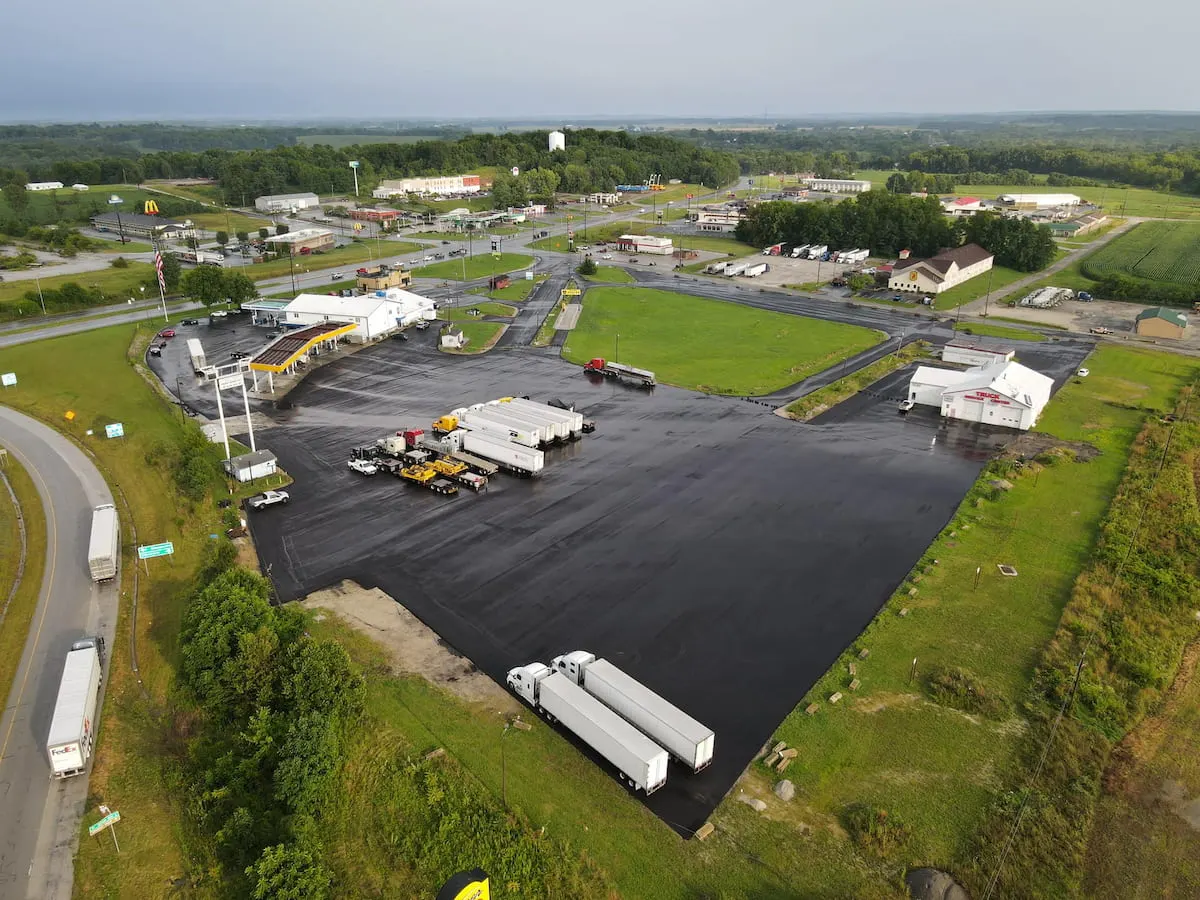
Square footage gets a quote started, but it rarely decides the final number. For commercial asphalt near Carmel, the bigger swings come from traffic loads, the shape of the old pavement, the base underneath, water, and how much room crews have to work. Our commercial asphalt paving estimates begin with a look at those conditions.
Start with how the lot is used
A lot that takes box trucks every morning is a different job from a small office lot with a few dozen cars. Heavy wheels and tight turns punish pavement, especially at drive lanes, dumpster pads and loading areas. The pavement section (the thickness and layering of asphalt and stone) is usually built heavier where loads are heavier, and that means more material and more labor.
Tell the estimator where the trucks go, where cars park, and whether any area sees standing or slow-turning vehicles. One lot can need two different sections in two different zones.
Look at what is already there
Old pavement leaves three basic paths: patch it, overlay it, or tear it out and start over. Each one carries a different amount of prep, and prep is where quotes drift apart.
| Path | Often makes sense when | What adds to the scope |
|---|---|---|
| Patching | Damage is limited to a few spots | How many areas, and how deep the failure goes |
| Overlay (a new layer over the old surface) | The surface is worn but the base is firm | Milling, crack treatment, matching grade at edges and drains |
| Remove and replace | Failure is widespread or the base is weak | Demolition, hauling, base repair, full new paving |
When you compare bids, check that each one assumes the same path. An overlay quote on a lot that really needs a new base is not a bargain. It is a different, smaller job that may fail early. Cracks that start in a weak base tend to come back up through fresh asphalt.
Check the base and the water
The base is the compacted stone layer that carries the load under the asphalt. If it is soft, wet or uneven, even well-placed asphalt will not last. Signs of trouble include ruts, sunken patches, alligator cracking (a web of small cracks) and spots that stay wet after rain. Sometimes a crew opens a small section to see what is below.
Drainage and the base go together. Pavement should shed water toward inlets, curbs or swales instead of holding it. A low spot that ponds usually means a grade problem, and fixing it during the paving work adds scope, though it is cheaper than repaving the same spot later. Water that sits on a lot also feeds freeze-thaw damage, covered below.
Plan for entrances, traffic and equipment
Access affects labor and schedule as much as materials do. If the business has one entrance and must stay open, the work is split into phases so one part of the lot is closed while another stays usable. Narrow drives, low clearances, and little space to stage trucks and rollers slow production.
- Name the hours the lot cannot be blocked
- Point out delivery routes and emergency access
- Mention any areas that must stay open throughout
- Note where trucks could park while they load and unload
These answers decide the order of work. Larger sites often follow this phased approach in our parking lot paving projects.
Weather can shrink the window in Indiana
Central Indiana winters bring cold, precipitation and freeze-thaw cycles, where water enters pavement, freezes, expands, then thaws and leaves gaps behind. November and December often bring days that are too cold or wet for paving. Hot mix asphalt has to be placed and compacted while it is still hot enough, so crews check air and surface temperatures before they start. A frozen or soaked base is a reason to wait.
If you manage property in Carmel, Fishers or Indianapolis, a late-fall start can slip on short notice. We work across the area, including Carmel and Fishers. Ask how a delay would change the sequence, whether repairs come first and paving after, and what state the lot would be left in if a cold snap hit mid-job. If the schedule does not fit before winter, a spring start can be cleaner than rushing the work.
Pull your site details together first
- Estimate the paved area and describe daily traffic.
- List surface problems: potholes, ruts, sunken areas, cracking.
- Mark where water collects after rain.
- Write down access limits and business hours.
Then ask each contractor what the scope includes for prep and traffic staging, and whether base repair is priced in or handled as an extra if it turns up. For a broader look at the work, see our asphalt paving services.
Send us the site details and we will give you a Free Estimate based on the conditions on your lot.
Common questions
What changes a commercial asphalt quote the most?
The condition of the old pavement and base usually moves the scope more than anything else. Removing and replacing with base repair is far more work than an overlay on a firm surface.
Can a business stay open during parking lot paving?
Often yes, if the work is phased so part of the lot stays usable. Share your hours and delivery routes early so the order of work can be planned around them.
Can commercial asphalt be placed in November and December in Indiana?
Sometimes, but cold air, rain and frozen ground can force delays. Crews check air and surface conditions before placing asphalt, so ask how a delay would be handled.
Areas we serve
Our services
Have a question about your project? Call (877) 203-4688